


What to do in San Polo: Rialto, the Frari and beyond
San Polo is the smallest sestiere in Venice, yet it’s the one that has seen more people pass through than anywhere else. This is where the Rialto market sits — the city’s commercial heart for a thousand years. This is where the Frari holds its Titians and the Scuola Grande di San Rocco its Tintorettos. And here, two calli from the most photographed bridge in the world, there’s still a quarter where Venetians do their shopping and children play in the campo.
That’s the beauty of San Polo: a few steps take you out of the crowd and into the real city. This guide is for anyone who wants to spend time in San Polo, not rush through it toward Rialto.
The character of the sestiere
San Polo occupies the inner bend of the Canal Grande, facing San Marco, to which it’s linked by the Rialto bridge. It’s tiny and entirely walkable in minutes, but it keeps changing face: the market front is loud and lively, the inner calli toward the Frari are quiet and residential. It’s a sestiere of contrasts, and that’s its strength. Everything is within reach — market, art, vaporetti, San Marco ten minutes away — yet you can sleep on a calle where no one passes.
What to see in San Polo
The Rialto market
It has been the food heart of Venice for over a thousand years, in two parts: the Erberia, the fruit and vegetable market, and the Pescheria, the fish market under neo-gothic loggias facing the Canal Grande. There’s one rule: go early. Between 8 and 10 you’ll find Venetians shopping; after that the groups arrive and the good fish is gone. The Pescheria is open Tuesday to Saturday, the Erberia Monday to Saturday, mornings only. Nearby stand San Giacomo di Rialto, which Venetians regard as the oldest church in the city, and the Ruga degli Orefici, the old goldsmiths’ street.
The Basilica dei Frari
Santa Maria Gloriosa dei Frari is the great gothic brick church of the Franciscans, with the second-tallest campanile in Venice after San Marco. Inside it holds some of the city’s absolute masterpieces: Titian’s Assunta above the high altar — an enormous altarpiece that commands the whole nave — Titian’s own tomb, and Canova’s funerary monument. There’s an entrance fee, but none of the queues of San Marco: it’s one of those places where you can look at the art slowly.
The Scuola Grande di San Rocco
A few steps from the Frari, the Scuola Grande di San Rocco is a building decorated entirely by Tintoretto, who worked on it for decades. Ceilings and walls are covered by an immense cycle of canvases; to study the ceilings without craning your neck, they hand you mirrors to carry at the entrance. It’s less famous than the big museums, but for anyone who loves painting it’s one of the most intense experiences in Venice.
Campo San Polo
It’s the largest campo in Venice after Piazza San Marco, but it looks nothing like it: no postcard cafés, just space, benches, a few trees and the neighbourhood children playing in the afternoon. In summer it hosts open-air cinema. The church of San Polo, which gives the sestiere its name, is worth a stop for a Via Crucis by the young Giandomenico Tiepolo.
The quiet calli toward San Tomà
Walk away from the market to the west and the sestiere empties at once. The calli around San Tomà and the Frari are residential and quiet, with the odd artisan workshop and no tourist signage. This is where San Polo feels most like a quarter where people actually live.
Where to eat in San Polo
The calli around the Rialto market are among the best places in all of Venice for a bacaro tour. It makes sense: where there’s a market there are fresh ingredients, and the historic bacari were born precisely to feed and water the people who worked there.
- Cantina Do Mori — one of the oldest bacari in the city, a long counter, cicchetti and small glasses of wine taken standing up
- All’Arco — tiny, steps from the Pescheria, cicchetti made with fish straight from the market
- Do Spade — historic, down a hidden calle near the bridge, a mix of locals and visitors
The rule, as ever in Venice: if the menu is handwritten or absent and the cicchetti are on the counter, you’re in the right place. Avoid the restaurants with photos of the dishes and a menu in four languages right by the Rialto bridge — there you pay for the location, not the cooking.
Markets and daily shopping
Living in San Polo, the Rialto market becomes your everyday shopping: fresh fish and vegetables minutes from the door, just as it is for Venetians. For everything else there are the small neighbourhood supermarkets. If you stay more than a few days, cooking with what you buy at the market is the simplest — and the finest — way to eat in Venice.
Getting around
The handiest vaporetto stops for San Polo are Rialto Mercato and San Tomà, both on the Canal Grande. But the sestiere is so small and central that almost everything is on foot: San Marco is about ten minutes across the Rialto bridge, the Frari and San Rocco are within the sestiere, and twenty minutes’ walk takes you practically anywhere in the historic centre.
When to go
The market is good year-round, but San Polo is at its best out of season. From November to March the inner calli fall quiet again, the Frari and San Rocco can be visited without crowds, and the morning market goes back to being something for the people who live in Venice. Accommodation, in those months, is also at its cheapest.
Melusina Homes also runs apartments in San Polo, steps from the Rialto market. Staying here means fresh produce on your doorstep, the Frari and San Rocco on foot, and a quiet calle to come home to in the evening — all booked directly, with no OTA commission. Get in touch and we’ll tell you which apartment fits your stay.
FAQ
What should you absolutely see in San Polo?
The Rialto market in the morning, the Basilica dei Frari with Titian’s Assunta, the Scuola Grande di San Rocco with Tintoretto’s canvases, and Campo San Polo, the largest campo in Venice after San Marco. They’re all within a few minutes’ walk of one another.
What days is the Rialto market open?
The Erberia (fruit and vegetables) is open Monday to Saturday. The Pescheria (fish market) runs Tuesday to Saturday (closed Sunday and Monday). Both are morning markets: for the best of it, arrive between 8 and 10.
Is San Polo far from San Marco?
No. Cross the Rialto bridge and you’re in San Marco in about ten minutes on foot. It’s one of the most central locations in Venice, while still being a sestiere with real neighbourhood life.
Are the Frari and San Rocco worth visiting?
Yes, especially if you love painting. The Frari holds Titian’s Assunta and his tomb; San Rocco is a whole building decorated by Tintoretto. There’s an entrance fee, but you can take your time, without the queues of San Marco.
Is San Polo a good area to stay in Venice?
Very much so, especially if you want to be central but in a genuine quarter. The market front is lively, but a short walk into the inner calli toward the Frari brings quiet. You have fresh produce on your doorstep and San Marco a few minutes away on foot.
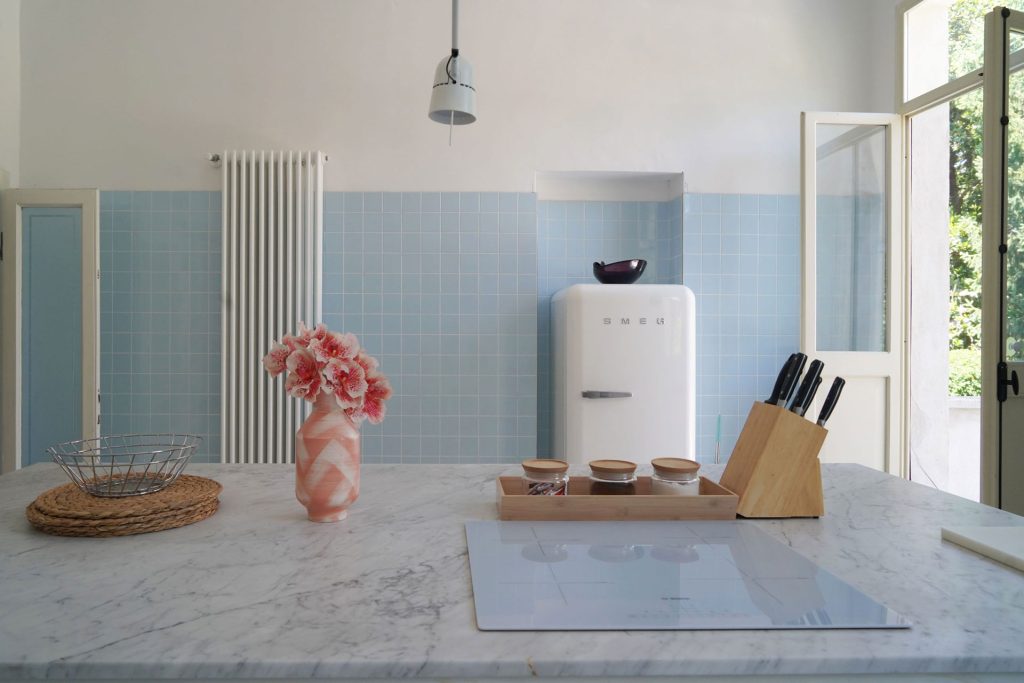
Live Venice like a local!
Melusina Homes also runs apartments in San Polo, steps from the Rialto market. Staying here means fresh produce on your doorstep, the Frari and San Rocco on foot, and a quiet calle to come home to in the evening — all booked directly, with no OTA commission. Get in touch and we’ll tell you which apartment fits your stay.

Melusina Homes: apartments in the heart of Venice for authentic stays. We welcome you year-round in thoughtfully designed apartments, with easy check-in, responsive support, and trusted local recommendations.
MELUSINA HOMES
INFO
Masin Services srl
Sestiere Castello 6661
30122 Venice
P.IVA 04496330277
Privacy Policy
Cookie Policy
