


Venice with children: a practical guide for families
The first question almost every parent asks is: is Venice suitable for children? The answer is yes, but it depends on how you plan your trip. Venice was not designed with young children in mind — the canals are open, the bridge steps are steep and the alleyways are narrow — and yet it is a city where families have lived for centuries and where families visit every week without any trouble.
This guide focuses on real, practical concerns, setting aside unnecessary alarmism and unfounded myths.
Safety: canals and bridges
Venetian canals rarely have low railings along the fondamenta. It’s important to hold young children under 4–5 years old by the hand along the narrower banks, just as you would near a busy road. No different from the normal care you would take in any other city.
Bridges have steps, but they are not as steep as they may appear in photos, and most have handrails. The busiest bridges, such as the Rialto and the Accademia, can get crowded — it’s better to cross them outside peak hours.
Pushchairs in Venice: the truth
Can you visit Venice with a pushchair? Yes, but it’s tiring. Bridges have steps, not ramps, and in the more central neighborhoods you’ll need to lift it at almost every crossing. If your child is older than 6 months, a baby carrier is far more practical.
There are exceptions, however: in some areas (Cannaregio along the Lista di Spagna, certain fondamenta in Castello) you can walk for long stretches without any steps. Choosing a ground-floor apartment in a neighborhood with wide fondamenta makes everything much more manageable.
For getting around, the vaporetto is convenient and can be boarded with a pushchair.
The vaporetto with children
The vaporetto is Venice’s main form of public transport. Children under 6 travel free. For adults, a standard ticket (valid on the vaporetto, tram, bus and People Mover for 75 minutes from first validation) costs €9.50, but if you plan to take multiple trips a 1- or 2-day pass is better value.
Key lines to know:
- Line 1 — runs the full length of the Grand Canal, stopping at iconic spots such as Rialto and San Marco
- Line 2 — a faster alternative that skips some stops
- Line 12 from Fondamenta Nuove — for Murano, Burano and Torcello
Vaporetti are crowded during peak hours (9–11 and 16–18). With young children or pushchairs, it’s better to board when passenger numbers are lower.
Things to do with children in Venice
A trip to Burano
Reachable from Venice in around 45 minutes by vaporetto, Burano is a colorful gem of the Venetian lagoon — an island that immediately wins you over with its brightly painted houses and authentic atmosphere. For children the visual impact is immediate: façades painted in yellow, red and blue that look as if they’ve stepped out of a picture book. The island is small, quiet and car-free. You can explore the whole thing in an hour and a half.
The vaporetto along the Grand Canal
Not as a means of transport, but as an attraction in itself. Taking Line 1 from Piazzale Roma to the San Zaccaria stop is a roughly 40-minute journey along Venice’s most beautiful canal. The ticket costs the same as a standard fare. For children who haven’t yet seen Venice from the water, it’s an unforgettable experience.
Masks and glassblowing on Murano
Venice’s artisan workshops often welcome visitors. On Murano, many furnaces offer free glassblowing demonstrations that are visually captivating for young children. In Venice itself there are also workshops where children can paint their own masks — just ask at the craft shops in Castello.
The campos as playgrounds
Venice’s campos — the neighborhood squares — are the local spaces for play. Children kick footballs around while parents relax on the benches. Among the most family-friendly are Campo Santa Margherita in Dorsoduro and Campo dei Mori in Cannaregio.
Where to stay with children in Venice
Staying in a hotel in Venice with children can be uncomfortable: small rooms, fixed breakfast times and high costs. An apartment, on the other hand, solves most practical problems: a kitchen to prepare children’s meals, space to move around and no timetable constraints.
For families, the key features to look for are: ground floor or low first floor (fewer stairs), a quiet but central location, a well-equipped kitchen and a washing machine.
Ca Melusina is a family apartment in Castello that sleeps up to 5, with a full kitchen including a dishwasher, free cots and highchairs on request, and located on a low first floor. Appartamento Sandro is on the ground floor with no stairs and a private courtyard — ideal for young children who need a safe outdoor space.
When to go with children
It’s best to avoid August: too many people and intense heat. The ideal months are April–May and September–October, for the pleasant climate and lower crowds. Winter, on the other hand, is a good time to visit Venice with older children — the city is peaceful and prices are low.
What to pack
- Comfortable, waterproof shoes for everyone (the alleyways can be damp)
- Ponchos or waterproof capes
- Baby carrier if your child isn’t walking yet
- A compact cool bag for children’s meals
- Rubber boots in winter or in November
FAQ
Is Venice safe for children?
Yes, as long as you pay attention near the canals. Venetian families have raised young children in this city for centuries, and the main canals have railings or raised fondamenta. In practice, it requires the same care you would take near a busy road.
Can you bring a pushchair to Venice?
Yes, but it can be tiring because of the bridges. If your child is older than 6 months, a baby carrier is far more practical. In areas with long fondamenta and few bridges (such as parts of Castello and Cannaregio) a pushchair is no problem at all. It can be brought on board the vaporetto free of charge.
Is the vaporetto free for children?
Children under 6 travel free. For older children, a 1- or 2-day pass is better value if you plan to take multiple trips.
How long does a trip to Burano take with children?
Half a day is enough. 45 minutes by vaporetto each way, plus 1–2 hours on the island. Children find it visually very exciting thanks to the colors of the houses.
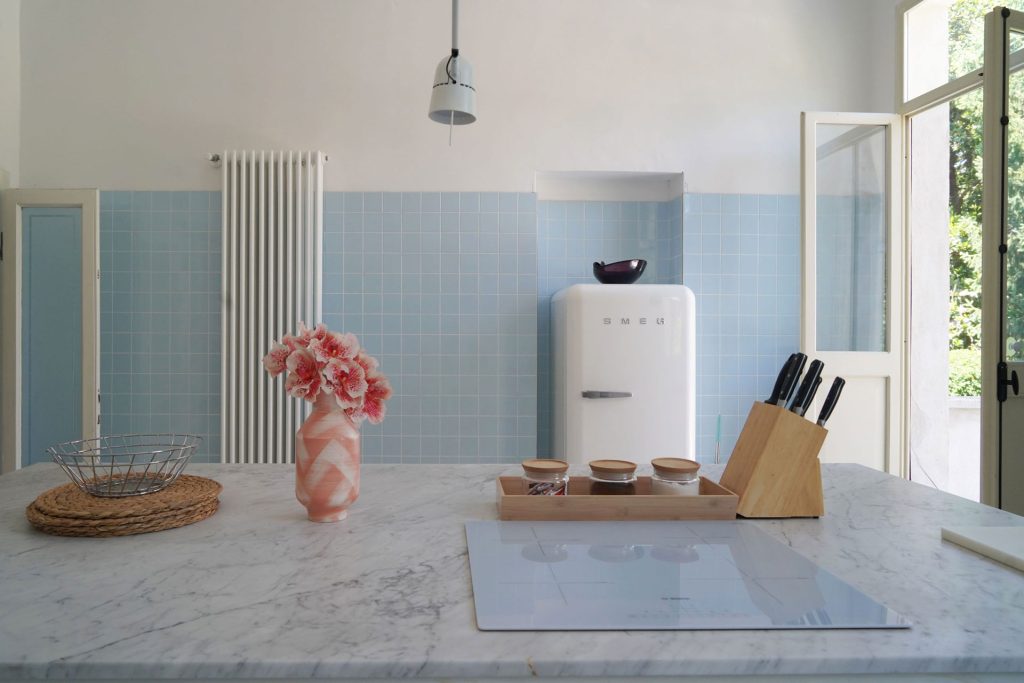
Venice with children, stress-free
Venice is great for children — if you know where to stay. We have apartments designed for families travelling together: full kitchen, cots and highchairs on request, washing machine and everything you need to enjoy the city without a worry.

Melusina Homes: apartments in the heart of Venice for authentic stays. We welcome you year-round in thoughtfully designed apartments, with easy check-in, responsive support, and trusted local recommendations.
MELUSINA HOMES
INFO
Masin Services srl
Sestiere Castello 6661
30122 Venice
P.IVA 04496330277
Privacy Policy
Cookie Policy
