


Working remotely from Venice: a practical guide
Working remotely from Venice: what you actually need to know
Venice isn’t the first city that comes to mind for remote work. Lisbon, Barcelona, Bali — those are the places in the conversation. Venice reads as a destination, not a base. And yet it works, often better than the cities more prominent in the digital nomad circuit.
This guide answers the practical questions: does the connection hold up, are there places to work outside the apartment, what does daily life cost, and how does the week organise itself. No Instagram hype. No “working with a view of the Grand Canal while sipping prosecco.” What you’ll find here is how it actually functions.
Internet connection: the most important question
The short answer: it depends on where you’re staying. Venice’s historic centre has fibre broadband in the main sestieri, but quality varies significantly from apartment to apartment. When fibre is genuinely installed — not just advertised — the connection holds up well for video calls, VPN, large file uploads.
What to check before booking: ask specifically whether the connection is FTTH (fibre to the apartment) or FTTC (fibre to the street cabinet, significantly slower). Ask for typical upload and download speeds. For anyone working with heavy files or on continuous video calls, upload speed is the critical number.
Coworking spaces and Wi-Fi cafés exist but are scarce and mostly in tourist-heavy areas where background noise is high. The apartment remains the best option for concentrated work.
Venice’s pace: a genuine advantage for working
Venice has no cars, no traffic in the conventional sense. This removes the ambient stress and noise that’s constant in cities like Milan or Amsterdam. You walk to the supermarket, walk to the vaporetto, walk to get a coffee. Your body moves differently and, most people find, your head works better for it.
The Venetian pace is slow by structural necessity — there’s no other option in a city built this way. That rhythm gets into your days after a week or two. Morning: work. Afternoon: walk, explore. Evening: eat properly. It’s not a romantic lifestyle concept — it’s a daily structure that tends to support productivity.
Cost of living for a remote worker in Venice
Venice has a reputation for being expensive. Partly true, partly overstated. The key distinction is between the tourist eating out three times a day and someone living in an apartment, shopping at the market and cooking.
Indicative costs for a one or two week stay:
Apartment: €800–1,500/week depending on season and size (winter prices significantly lower)
Groceries at Coop or Rialto market: comparable to any other Italian city
Vaporetto: €9.50 single, €65 for a 7-day pass
Eating out once a day (lunch at an osteria): €12–18 per person
Coffee at the bar: €1.20–1.50 standing at the counter
The biggest saving versus summer is the apartment in low season. Over a week you can save €300–600 compared to July–August prices for the same property.
Where to work beyond the apartment
Biblioteca Nazionale Marciana
For members (annual registration with ID), one of the most beautiful study spaces in Europe. Located in Piazzetta San Marco. Not suitable for video calls; excellent for focused work and research.
The right bars
Venetian bars open early and have counters where you can work discreetly in the morning before the brunch crowd arrives. Don’t expect laptop-friendly cafés with power outlets everywhere — the Venetian habit is espresso standing at the counter. But with respect and discretion, many places will let you sit and work for a couple of hours.
Neighbourhood libraries
Each sestiere has a civic library. Hours are more limited than in other cities, but Wi-Fi and silence are guaranteed. Useful for a couple of hours when you need a change of environment.
Best neighbourhoods for remote work
Castello works best for people working remotely. It’s the largest sestiere, has a network of quiet calli, basic shops are well represented, and restaurant prices are more honest than San Marco. It also has the best position for walking to the Biennale and to Fondamenta Nuove for the islands.
Cannaregio is the second option: along its quieter canals it has a stillness unlike anywhere else in the city. The Misericordia area has a few more contemporary bars where you’ll occasionally spot other people working.
Avoid looking for apartments in San Marco or immediately around Rialto. The tourist foot traffic is constant and disruptive, prices are at their highest, and the density of quality restaurants and bars is at its lowest.
Daily logistics
Groceries: Coop has locations in several sestieri; Despar shops are well distributed. For fresh fruit, vegetables and fish, the Rialto market (Monday–Saturday mornings) is the best option. With a fully equipped kitchen in the apartment, cooking is the sensible choice for anyone staying more than a few days.
Pharmacies are in every sestiere. For urgent medical needs, the Pronto Soccorso at Ospedale Civile Giovanni e Paolo is in the historic centre.
Laundry: most apartments for medium-length stays have a washing machine. A few self-service laundries exist in the outer sestieri.
How long is worth staying
A week is the minimum to understand how the city functions without rushing it. Two weeks is the ideal format: the first week you orient yourself, the second you actually work in the rhythm. A month is for those lucky enough to do it — and who want the complete experience.
Melusina Homes manages apartments in Castello with genuine fibre Wi-Fi, fully equipped kitchens and washing machines, designed precisely for working stays. Automatic check-in, prices without OTA commission, long-stay rates available on request.
FAQ
Does the Wi-Fi actually hold up for remote work in Venice? It depends on the apartment. FTTH fibre exists in the main sestieri but isn’t universal. Always ask about speed and connection type before booking. In Melusina apartments the fibre is real and tested.
Are there coworking spaces in Venice? A few, but not well developed compared to other cities. An apartment with a good connection remains the best solution. Some civic libraries and the Marciana offer quiet study spaces.
Is Venice expensive for remote workers? Depends on the season and how you manage daily life. In low season (November–April) apartments cost significantly less. If you cook rather than eating out three times a day, the cost of living is comparable to any other Italian city of equivalent standing.
Will I feel isolated working from Venice? Venice is small but it’s not a bubble. There are people working remotely, international professionals with longer stays, and a creative community that’s particularly visible around the Biennale. You just need to know where to look.
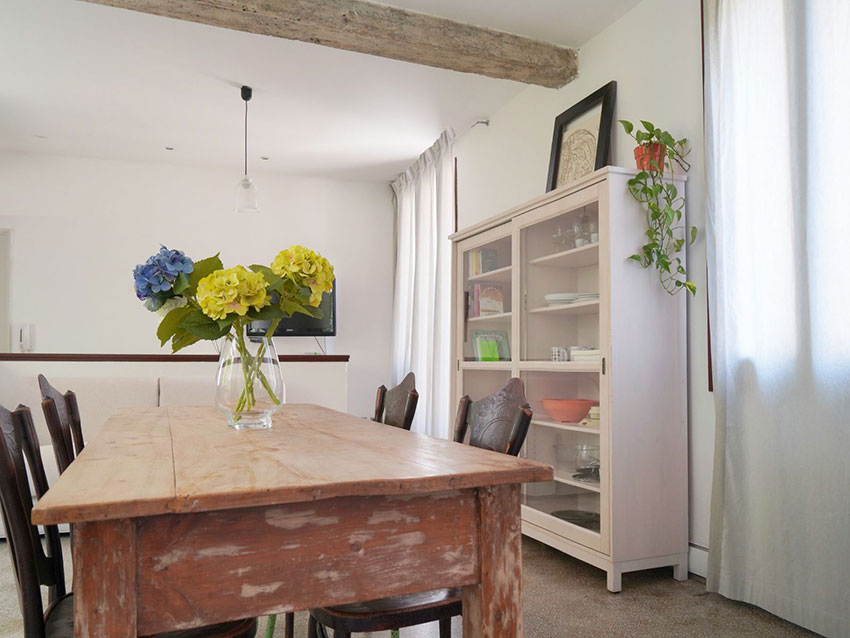
Venice works for remote work. We're here for it.
Apartments in Castello with tested fibre Wi-Fi, full kitchen and washing machine. Automatic check-in, long-stay rates on request. Book directly — no commission, no middleman.

Melusina Homes: apartments in the heart of Venice for authentic stays. We welcome you year-round in thoughtfully designed apartments, with easy check-in, responsive support, and trusted local recommendations.
MELUSINA HOMES
INFO
Masin Services srl
Sestiere Castello 6661
30122 Venice
P.IVA 04496330277
Privacy Policy
Cookie Policy
