


Venice in winter: why the off season is the best season
Venice in winter: what the city looks like when the tourists leave
Anyone who tells you Venice in winter is depressing probably visited in August. The city in low season is different — not worse. Quieter, more navigable, and genuinely more itself. The osterie go back to the locals. The calli empty out. Apartment prices drop significantly. And the morning fog on the canals is one of the most beautiful things you can see anywhere in Europe.
This isn’t a piece designed to sell you on the idea. It’s a description of what Venice is actually like between November and March — the real advantages, and the things you’ll want to plan around.
What actually changes in winter
The difference is immediate. The fondamenta are walkable. The bridges aren’t blocked. Piazza San Marco at eight in the morning has pigeons, a few Venetians heading to work, and you. It’s one of the rare European cities where you can stand in the absolute centre during winter without feeling like you’re queuing for something.
Restaurants that spend summer churning through tourist menus go back to cooking for locals — because locals are the only people left. The menus get shorter and more honest. The fish is market-fresh. The prices are normal.
Acqua alta: how much of a problem is it really
High water is the reason most people hesitate about Venice in winter. It’s understandable, but the reality is less dramatic than the coverage suggests. The most frequent episodes cluster between October and December; from January onwards they decrease.
In practice: when an alert goes out, the city installs raised walkways along the main routes. With waterproof boots or the disposable rubber overshoes sold everywhere in the city, you can move around normally. Vaporetti run as usual. Most apartments in the historic centre don’t flood — ground floor units in the lowest-lying calli are the most exposed, and it’s worth checking with whoever you’re renting from.
Seeing acqua alta once is actually one of those things you don’t forget.
The fog: atmosphere, not inconvenience
In the colder months, lagoon fog settles on the canals in the early morning. This is what Venetian painters and Northern European artists chased for centuries — Turner, Monet, Whistler all came for this light. At eight in the morning with the fog sitting on the water, the palazzi on the Grand Canal are half-visible, the reflections are blurred, the silence is complete.
If you photograph, design, or simply pay attention to how things look, winter is the right time.
What to do in Venice in winter
Carnival (late January to early March)
Venetian Carnival has two versions. There’s the tourist version — parades in Campo San Polo, costume hire, staged photos in front of the Basilica. And there’s the Venetian version, which plays out in the campos of the sestieri: children in costume, families, cicchetti at the bacaro. If you stay in the neighbourhoods rather than gravitating toward San Marco, you see the real thing.
The sweet spot is the week before martedì grasso. Before that, there are still manageable crowds and reasonable prices. After that, it gets busy.
Museums without queues
The Gallerie dell’Accademia, Ca’ Rezzonico, the Museo Correr, the Querini Stampalia Foundation — in winter you walk in, usually without booking weeks in advance. These are the months when you can actually stand in front of a painting long enough to look at it properly. The Giorgio Cini Foundation on San Giorgio Maggiore runs good temporary shows in low season and is worth a dedicated afternoon.
Churches: free entry, actual silence
Venice has around sixty churches open to the public. In summer many are overrun with tour groups. In winter you enter, find a custodian, a candle, quiet. The Basilica dei Frari in San Polo, the Gesuiti in Cannaregio, the Madonna dell’Orto — these are places where in summer you can’t stay long enough to take anything in. In winter you can.
The islands off season
Burano in summer is overcrowded. In winter it’s the island of coloured houses where people actually live: fishing boats moored at the fondamenta, elderly residents sitting outside, children coming home from school. The number 12 vaporetto from Fondamenta Nuove takes 45 minutes. Torcello in winter is nearly empty: the Byzantine mosaics of Santa Maria Assunta, the bell tower, and very few visitors.
Rialto market in low season
The market without the crowds. In winter there are fresh lagoon cuttlefish, Treviso radicchio, clams. The cold helps — fish keeps better, prices are stable, and the vendors have time to actually talk to you.
Where to stay in winter
An apartment makes more sense than a hotel in winter. You can cook what you buy at the market, you have freedom over your schedule, and the cost difference is significant — sometimes 40–60% less than the summer peak for the same place.
Melusina Homes has apartments available year-round in Castello, the sestiere best positioned for exploring the city on foot. Automatic check-in, fibre Wi-Fi, fully equipped kitchens. Winter rates on direct inquiry — no OTA commission.
FAQ
Is Venice worth visiting in winter? Yes, especially if you’ve already been in peak season and want to understand the city differently. In winter Venice works for people who live there, not for visitors moving in bulk. It’s a different experience — often a better one.
Is acqua alta dangerous? No. It’s a manageable inconvenience. With waterproof boots or overshoes you can walk anywhere even during significant flooding. The city installs raised walkways on main routes. Vaporetti don’t stop running.
What’s closed in winter? Some museums reduce their hours or close one extra day per week compared to summer. A few restaurants take a week’s holiday in January or February. Less is closed than most people expect.
How much cheaper is it than summer? For apartments the difference can be 40–60% off peak summer prices. Restaurants charge the same year-round. Vaporetti fares don’t change seasonally.
Is the fog constant? No. Lagoon fog is most frequent in the early morning between November and February. Clear winter days exist and are extraordinary — low light on the Grand Canal, near-white sky, reflections that look like watercolour.
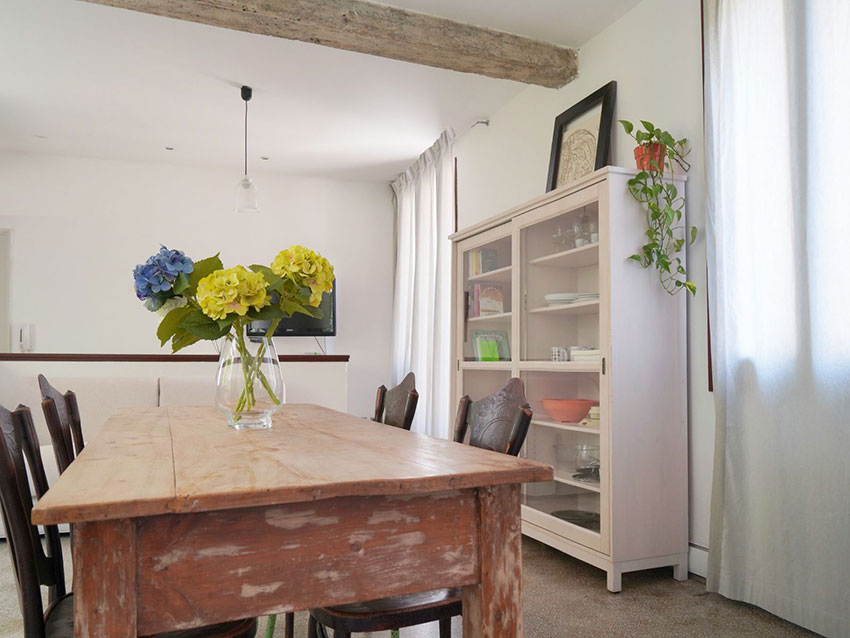
Winter in Venice, without the crowds
Melusina Homes apartments are open year-round in Castello. Low season means better prices, direct booking and no OTA commission. Automatic check-in, full kitchen, fibre Wi-Fi.

Melusina Homes: apartments in the heart of Venice for authentic stays. We welcome you year-round in thoughtfully designed apartments, with easy check-in, responsive support, and trusted local recommendations.
MELUSINA HOMES
INFO
Masin Services srl
Sestiere Castello 6661
30122 Venice
P.IVA 04496330277
Privacy Policy
Cookie Policy
