


Why you should avoid San Marco (and where to go instead)
Piazza San Marco is beautiful. It’s also where Venice works worst. If it’s your first time and you want to see the Basilica and Palazzo Ducale, go. But if you’re coming back, or if you have more than two days, there are better ways to experience the city.
The problem with San Marco
San Marco is where mass tourism converges. Cruise passengers, organised groups, school trips — they all end up there. The result is a piazza that has become a photography set where nobody actually stops. You take the photo, dodge the pigeons, look at the café prices and leave.
The restaurants around San Marco are the worst in Venice. They don’t serve Venetian food — they serve what tourists expect to find. Pasta alla carbonara, pizza margherita, fixed-price tourist menus. Low quality, high prices. Venetians don’t eat there, which should tell you everything.
Even the Basilica — which is extraordinary — loses its meaning when you’ve been queuing for an hour surrounded by five hundred people. The architecture deserves attention, the mosaics are remarkable, but the experience is frustrating. You go in, see the bare minimum, come out. You never have time to actually look at it.
Where to go instead: Castello
Castello is the largest sestiere in Venice and the one where Venetians still live. Here you find the real market, the osterie that locals use, the campi where children play football. It’s Venice without the stage set — the city that functions as a city, not as a theme park.
Campo Santa Maria Formosa is the heart of Castello. It’s large and open, surrounded by bars and osterie where you can sit without feeling trapped. In the morning there’s the fish market, in the afternoon older Venetians sit in the sun, in the evening it fills with people drinking spritz. A living campo, not a photography set.
From Campo Santa Maria Formosa, walk towards Via Garibaldi. It’s the widest street in Venice — the only one where you can walk side by side without colliding with someone. Here you find the greengrocer, the butcher, the bakery that makes real bread. Bars where a coffee costs €1.20, not four. This is everyday Venice, the one that actually works.
Keep going to the Giardini Pubblici. They’re the only real gardens in Venice: large trees, benches, room to breathe. Venetians bring their children and dogs here, come to run. In summer there’s shade; in winter, quiet. Somewhere to be, not just to pass through.
Where to go instead: Cannaregio
Cannaregio is the northern sestiere, the least touristy. Here the main canal is still used for freight, not just gondolas. The fondamenta are wide, the palazzi less restored, everything has a more lived-in feel.
Fondamenta della Misericordia is where Venetians go out in the evening. Bars, bacari, osterie — places to drink and eat without being surrounded by tourists. Prices are honest, the food is real, the atmosphere is right. In summer it fills with people sitting outside; in winter it stays quiet.
The Ghetto is in Cannaregio. It’s the first Jewish ghetto in the world — the one from which the word derives. It’s an enclosed neighbourhood, with bridges that could be raised, small squares surrounded by unusually tall buildings. It carries a heavy history and a particular beauty. The Jewish Museum is worth visiting; the synagogues are extraordinary.
From Cannaregio you reach Fondamenta Nuove, Venice’s northern waterfront. This is where the vaporetti leave for the islands. The view opens out over the lagoon — Murano, San Michele, the mountains in the distance. The side of Venice that looks outward, towards the sea, rather than inward at itself.
Where to go instead: Dorsoduro
Dorsoduro is the sestiere of students and artists. The university is here, as are the Accademia and the Peggy Guggenheim Collection. It has a different energy — younger, less formal.
Campo Santa Margherita is Dorsoduro’s living room. Large, irregular, surrounded by bars and pizzerias. Students spend their afternoons here; in the evening it fills with people drinking outside. It has the atmosphere of a university square, which in Venice is rare. Prices are low, the mood is relaxed.
Le Zattere are the long fondamenta looking out towards Giudecca. Wide, sunny, ideal for walking. In summer, some of the best gelato in Venice. In winter you can walk for kilometres without meeting anyone. Where Venetians go to run, walk their dogs, watch the sunset.
The Peggy Guggenheim Collection is small but exceptional. Modern art in a palazzo on the Canal Grande. Well run, never overcrowded, the works are first-rate. If twentieth-century art interests you, it’s not to be missed. If it doesn’t, the garden alone is worth a visit.
The point is always the same
Venice works better away from San Marco. Prices drop, quality rises, the people you meet actually live here. You don’t need to avoid San Marco on principle — but you don’t need to spend half your trip there either. See it, photograph it, then move on. The real city is elsewhere.
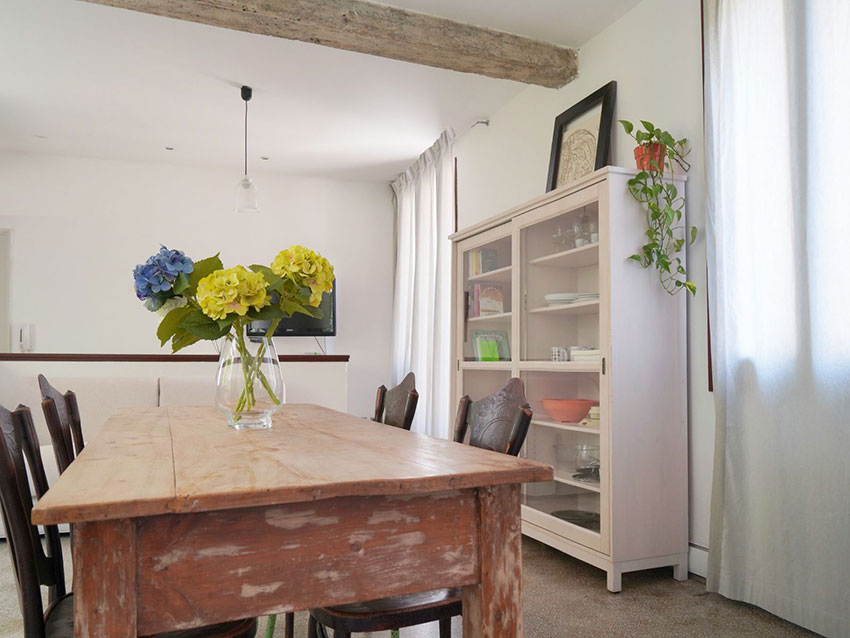
Live Venice like a Venetian
Our apartments are in Castello, the neighbourhood where Venice still functions as a city. Real markets, real osterie, real daily life. Automatic check-in, fast WiFi, everything you need to live here — not just pass through.

Melusina Homes: apartments in the heart of Venice for authentic stays. We welcome you year-round in thoughtfully designed apartments, with easy check-in, responsive support, and trusted local recommendations.
MELUSINA HOMES
INFO
Masin Services srl
Sestiere Castello 6661
30122 Venice
P.IVA 04496330277
Privacy Policy
Cookie Policy
